Block paving driveways in Sutton-in-Ashfield and Mansfield.
Block paving driveways, paths and parking areas across Sutton-in-Ashfield, Mansfield, Nottingham and the rest of Nottinghamshire and Derbyshire. Every drive is built on a dug-out, compacted MOT Type 1 sub-base with the drainage planned before a single block goes down, and every job carries our 10-year guarantee.
- Compacted MOT Type 1 sub-base
- Free site visit, fixed written quote
- 10-year guarantee
- Permeable options available
Which block paving patterns work best on a driveway?
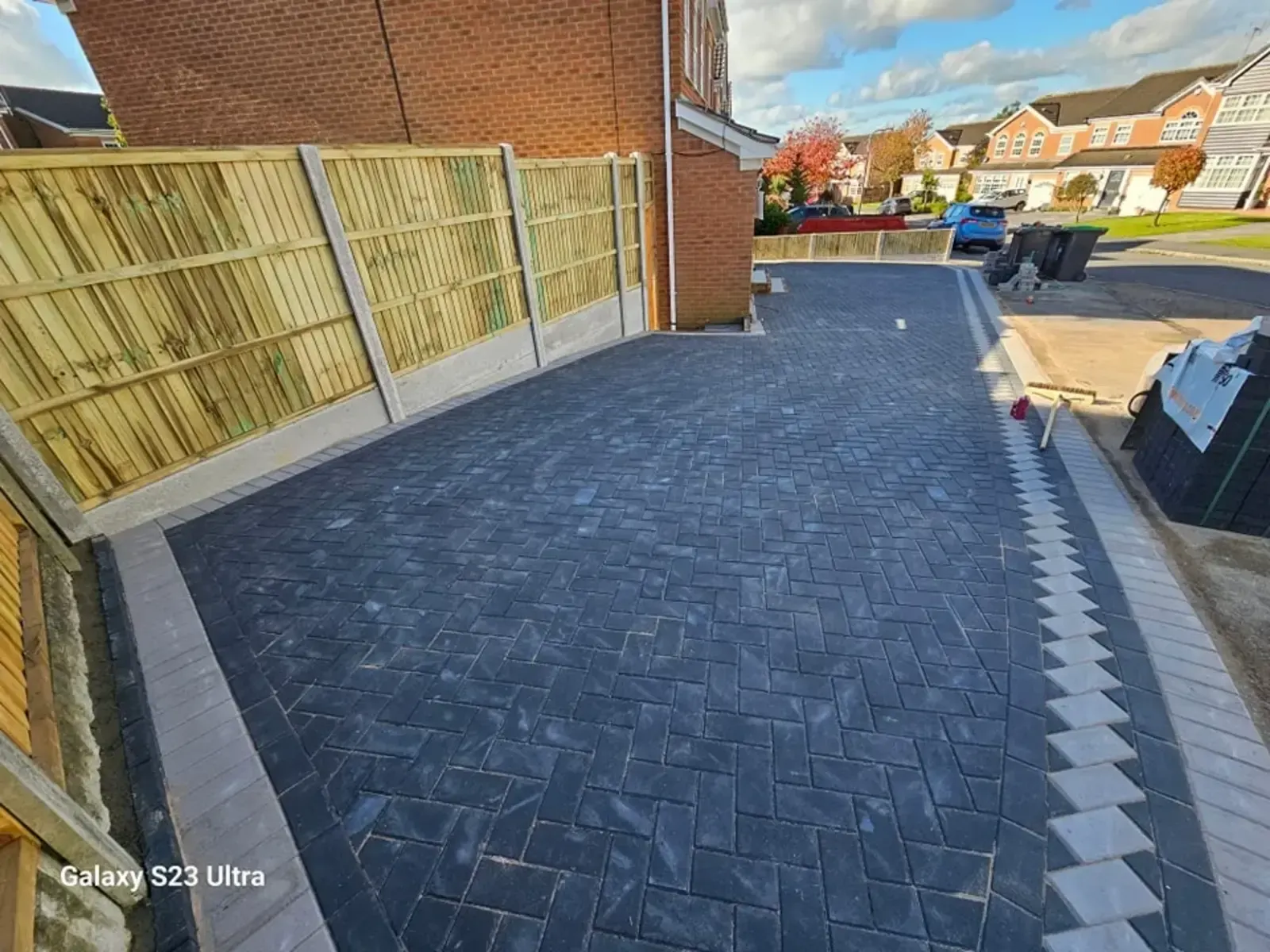
The pattern is not only about looks. The way the blocks lock together decides how well the surface copes with cars turning on it, so we match the pattern to how the area will be used.
- Herringbone block paving
- Laid at 45° or 90°, it gives the strongest interlock and resists the twisting of tyres, which is why it is the usual choice for driveways.
- Basket-weave
- Pairs of blocks laid at right angles for a traditional, decorative look. Best on paths, patios and areas with lighter traffic.
- Stretcher bond
- Simple running rows, like brickwork. Clean and understated, laid across the direction of traffic on a drive.
- Borders and bands
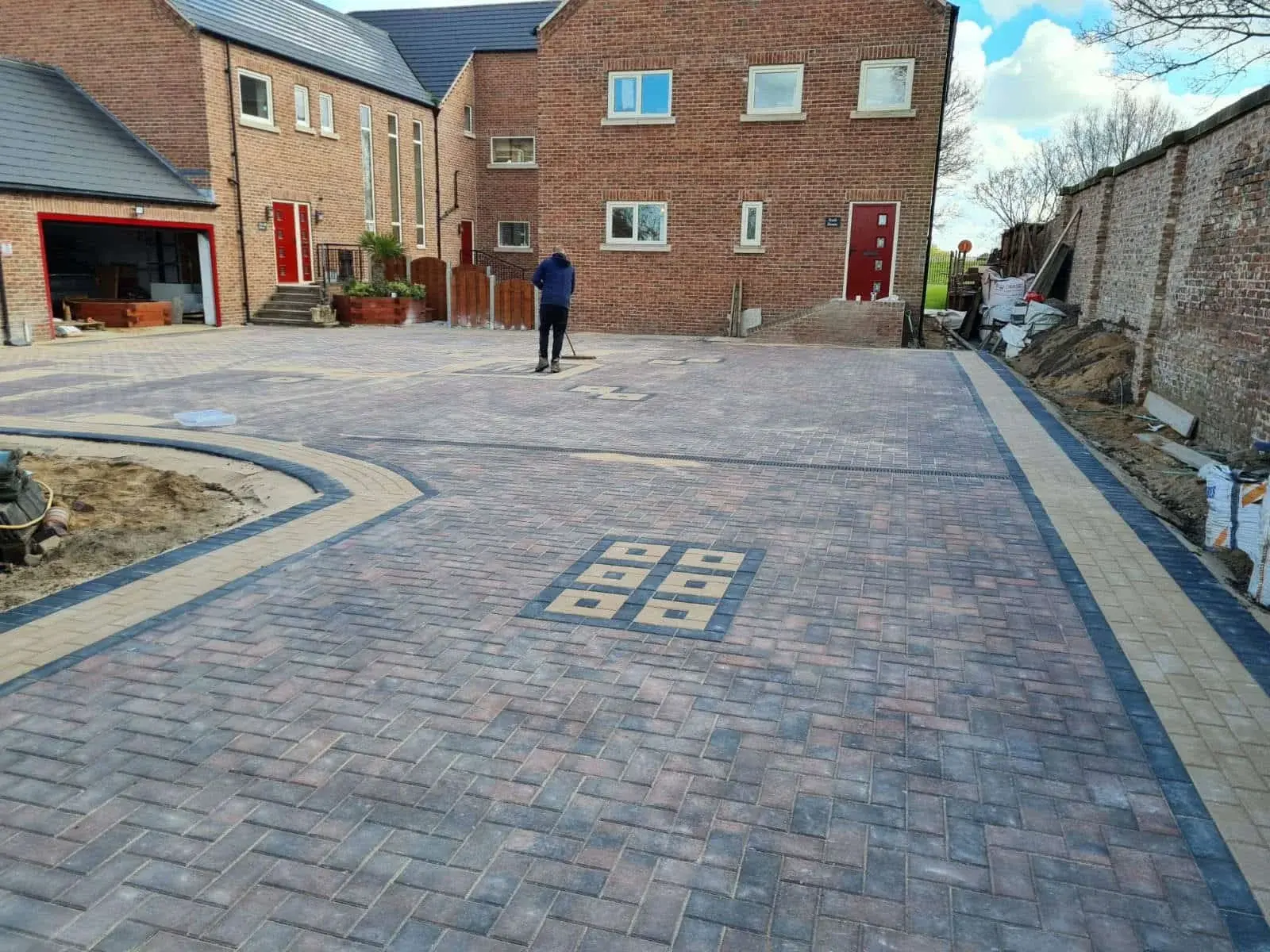
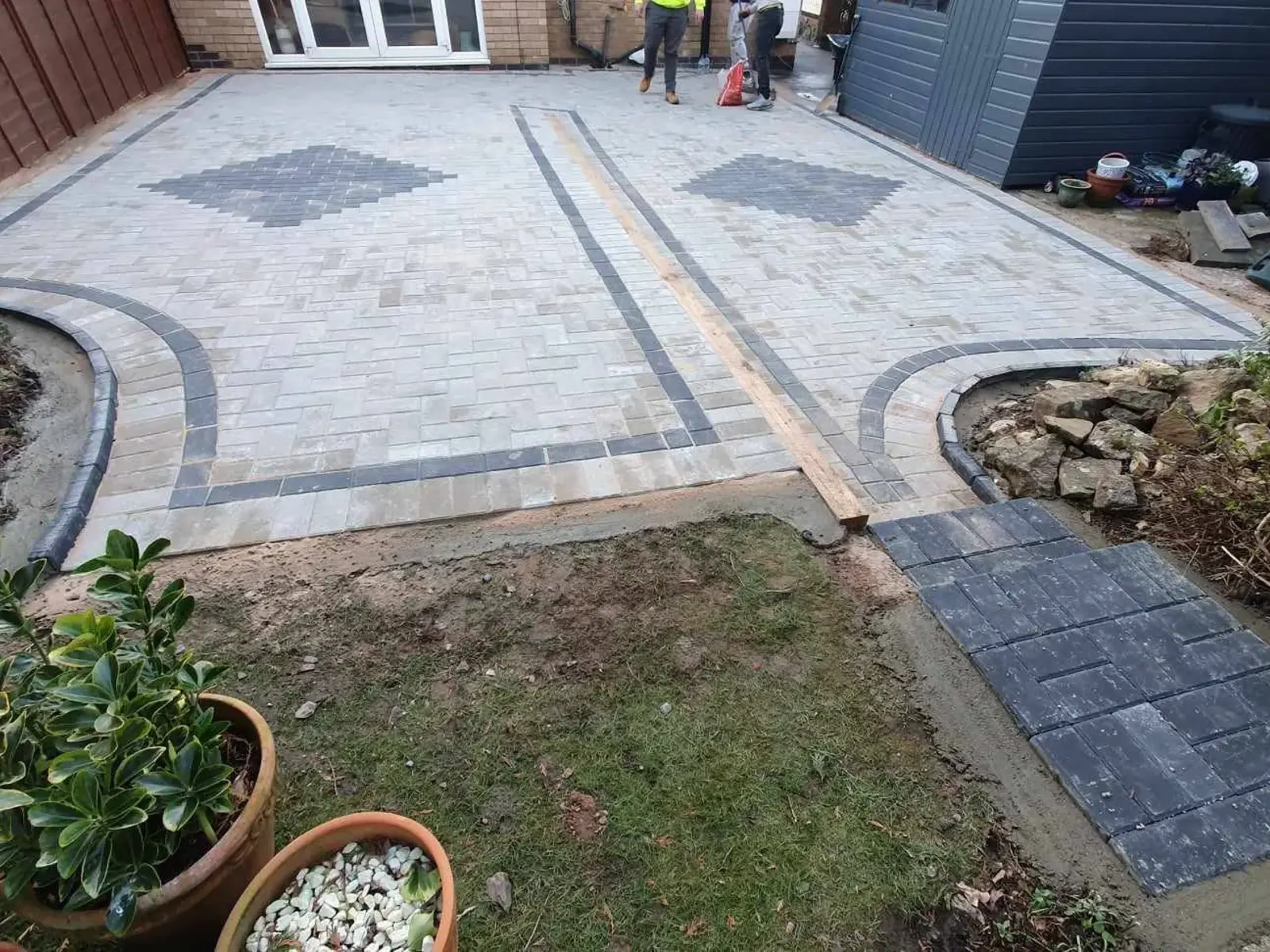
- A contrasting edge course frames the drive and holds the field of blocks in place. Bands, curves and a mix of colours can break up a large area.
What is under a block paving driveway?
Most driveway problems, such as dips, rutting and rocking blocks, start underneath. We dig out the old surface and soil to the depth the ground needs, then lay and compact MOT Type 1 crushed stone in layers. Much of the ground around Sutton-in-Ashfield and the rest of Ashfield is clay, which holds water and moves with the seasons, so a well-compacted sub-base matters even more here.
Driveways are normally laid in 60 mm blocks on a screeded bed of sharp sand, held in by edging set in concrete so the blocks cannot creep. The finished surface is vibrated with a plate compactor and the joints are filled with kiln-dried sand, which is what locks the blocks together.
Before we start we set the levels so water runs away from the house and off the drive, towards a border, a soakaway or a channel drain across the entrance. Your free site visit covers all of this, and the written quote says what the job includes.
How much does a block paving driveway cost per m²?
The rate below comes straight from our price guide. Where your drive sits in that range depends on the size, the blocks and pattern you choose (herringbone and curves mean more cutting), how much of the old surface has to come out, edging, drainage and access for machinery and the grab lorry.
Weighing up tarmac or gravel instead? Compare every driveway surface, with guide prices for each.
- Block pavingPatterned, repairable, many colours£40–£80 per m²
Guide prices per square metre from our current price guide, including labour and materials. You get one fixed, written price after a free site visit.
What is permeable block paving, and do I need it?
Permeable block paving lets rainwater soak through the joints instead of running off into the road. The blocks have wider joints filled with fine grit, laid over an open-graded stone sub-base that holds the water and lets it drain away slowly into the ground.
It matters for planning. Covering more than 5 m² of a front garden with a hard surface that drains onto the road needs planning permission, but a permeable surface, or one that drains to a lawn or border on your own land, normally does not. We will tell you at the site visit which approach suits your plot, and it is always worth confirming with your council.
Is block paving easy to repair?
This is where block paving earns its keep. If a utility company needs to dig up the drive, or one area gets stained or damaged, the blocks can be lifted and relaid or replaced individually. Solid surfaces such as tarmac or concrete have to be patched, and the patch usually shows.
Keep a few spare blocks from the same batch when the drive is finished, as colours can vary slightly between batches.
Should I seal block paving, and how do I clean it?
Day-to-day care is simple: sweep the drive regularly, pull out weeds before they root, and top up the jointing sand every few years, because the sand in the joints is what holds the blocks tight.
To clean block paving, brush it with water and a paving cleaner suited to concrete blocks, and treat oil marks promptly. A pressure washer lifts dirt well, but keep it on a lower setting and at an angle so it does not blast the sand out of the joints, and re-sand afterwards.
A block paving sealer is optional. Once the drive is clean and dry, a sealer can help bind the jointing sand, make weeds and stains less likely to take hold, and refresh the colour. Some sealers leave a wet-look sheen and others a natural finish, and every sealer wears over time and needs reapplying, so try it on a small area first.
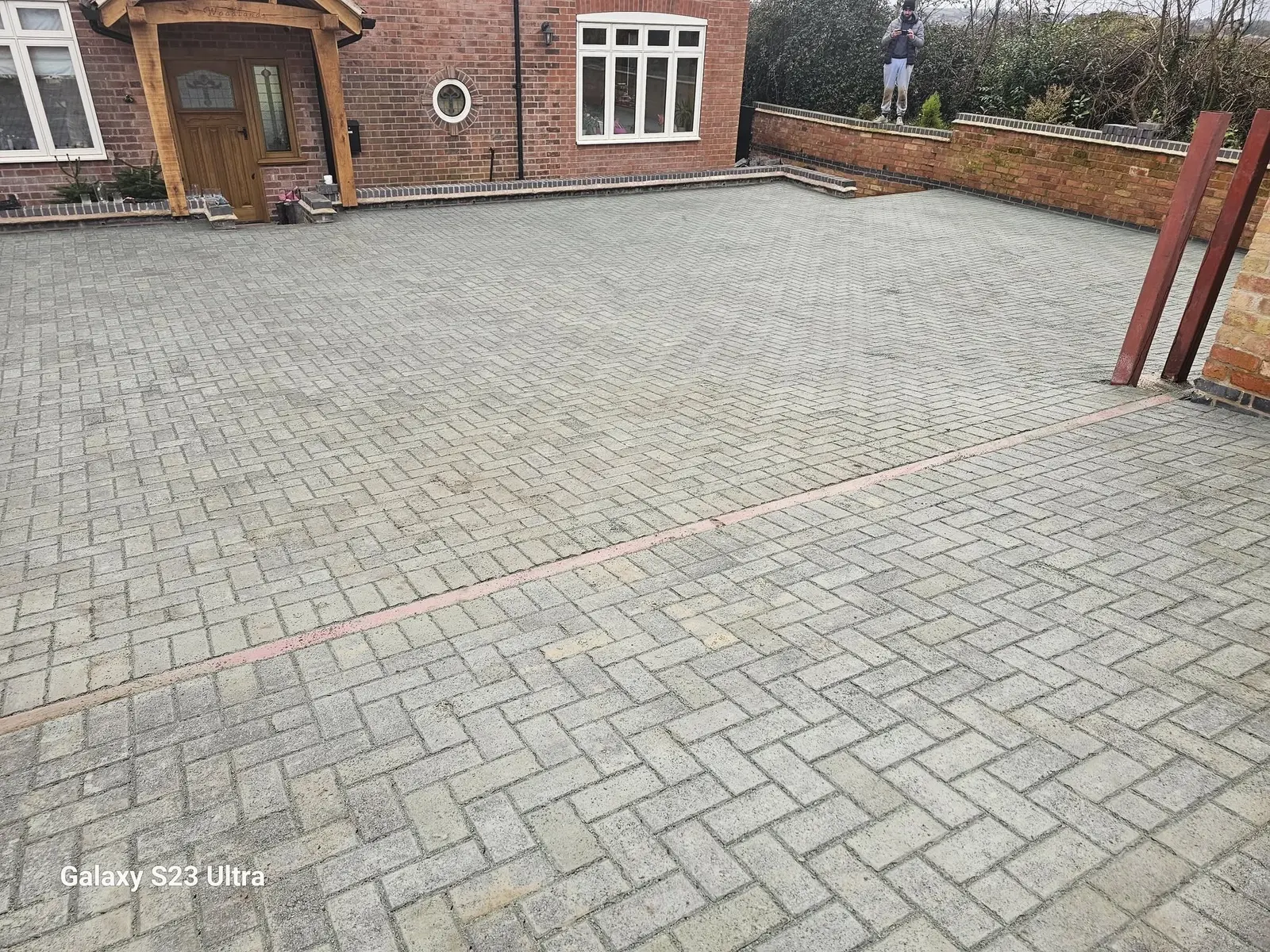
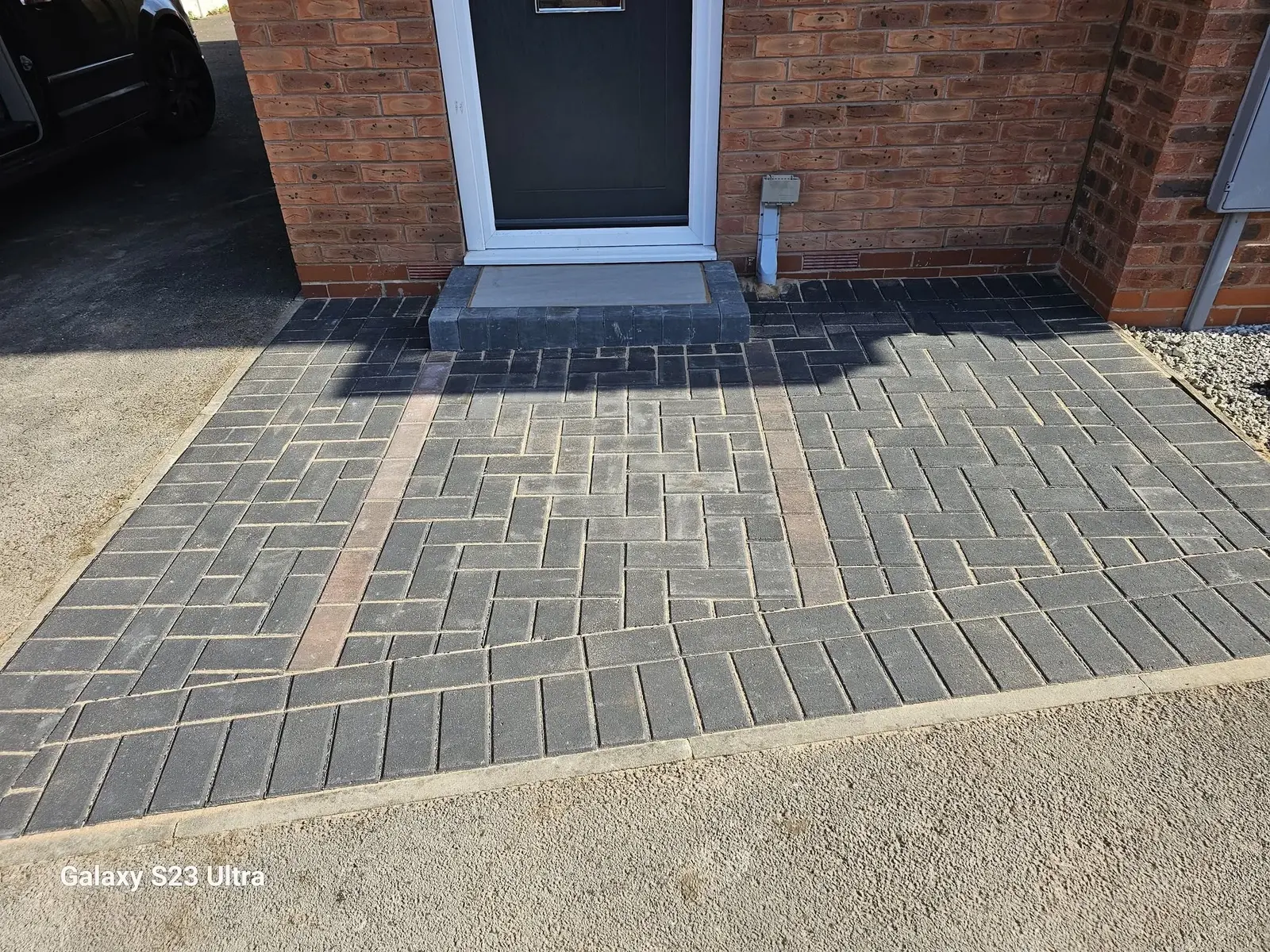
Block paving we have laid.
Where do we lay block paving?
We are based in Sutton-in-Ashfield (NG17) and lay block paving driveways in Mansfield, Nottingham and across Nottinghamshire and Derbyshire. Lucian visits every property himself, measures up and gives you one fixed, written price.
- Block paving in Sutton-in-Ashfield
- Block paving in Mansfield
- Block paving in Mansfield Woodhouse
- Block paving in Kirkby-in-Ashfield
- Block paving in Huthwaite
- Block paving in Nottingham
- Block paving in Alfreton
- Block paving in Chesterfield
- Block paving in Heanor
- Block paving in Ripley
- Block paving in Bolsover
- Block paving in Eastwood
Related services
Laid on a properly dug and compacted sub-base with firm edging, a block paving driveway should last for many years. The blocks themselves are very hard-wearing; when a drive fails it is almost always because the base was too thin or the edges were not held, which is why we never cut corners there. A damaged or stained block can be lifted and replaced on its own, and every drive we lay carries our 10-year guarantee.
Not usually. Block paving needs a compacted stone sub-base and a sand laying course at the right depth, and laying on top of an old drive raises the level towards the damp-proof course and door thresholds and traps water. We dig out the old surface, and the cost of that is included in your fixed, written quote.
Yes. Once the blocks are compacted and the joints are filled with kiln-dried sand, block paving can normally be used straight away, unlike resin or concrete, which need time to cure. The joints settle over the first few weeks and may need a light top-up of sand.
That is efflorescence: natural salts from the cement in concrete blocks rising to the surface, most often in the first months after laying. It is harmless, does not affect the strength of the drive and usually weathers away on its own as the blocks are exposed to rain.
It is optional, not essential. On a clean, dry drive a good block paving sealer helps bind the jointing sand, makes it harder for weeds and oil stains to take hold, and refreshes the colour, with either a natural or a wet-look finish. It wears over time and needs reapplying every few years. On new concrete blocks it is best to wait until any efflorescence has weathered away, or it can be sealed in.
Almost always from seeds that blow in and root in dirt collecting in the joints, not from below. Sweeping regularly, keeping the joints topped up with sand and pulling weeds while they are small keeps them under control. A sealant or stabilising jointing sand makes it harder for seeds to take.
Projects completed
Designing outdoor spaces requires vision and expertise. We collaborate closely with homeowners across Nottinghamshire and Derbyshire to create tailored designs that reflect their personal style, needs, and budget.
Driveways & paving laid
From block paving to resin-bound surfaces, we design and install durable, stylish driveways and pathways that complement your property and stand the test of time.
Plants & trees planted
Even the most structured landscapes benefit from thoughtful planting. We select species suited to local soil and climate, ensuring year-round colour, texture, and natural softening of hardscaped areas.
Ready for a free quote?
No-obligation site visit, one clear price and a 10-year guarantee on the finished job.