
Do I need planning permission for a new driveway?
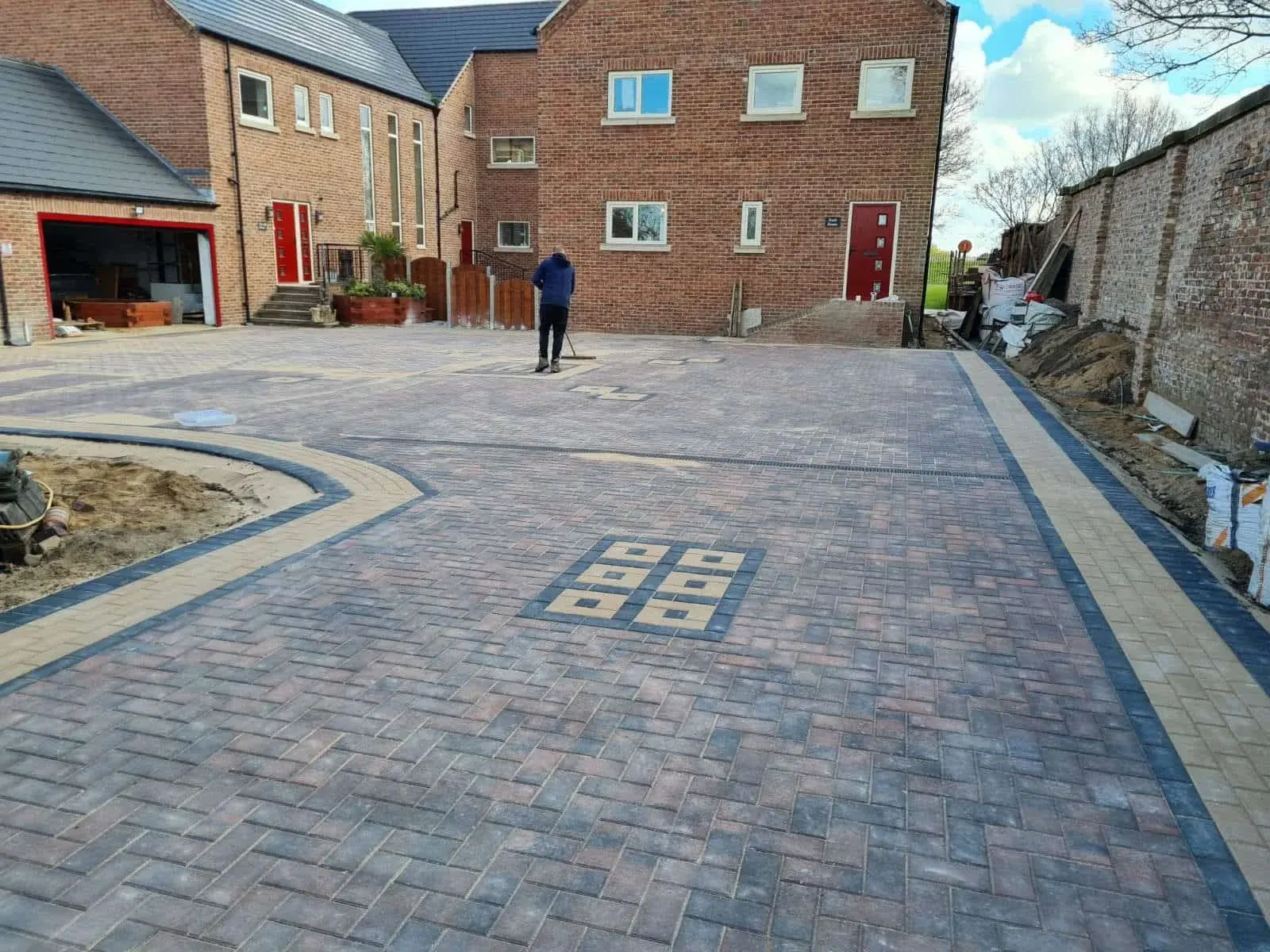
Usually not. A new or replacement driveway at a house in England does not need planning permission if it uses a permeable surface, or if rainwater runs onto a lawn, border or soakaway on your own land. You do need permission to cover more than 5 m² of a front garden with a hard surface that drains onto the road.
That is the rule set out on the Planning Portal and in the government's guidance on paving front gardens. This guide explains it, the exceptions, and the drainage choices that keep a new drive on the right side of it.
What is the 5 m² rule for front gardens?
Since 1 October 2008, paving a front garden has been treated differently depending on where the rainwater goes. The Planning Portal's page on paving your front garden puts it in two parts:
- No planning permission is needed for a new or replacement driveway of any size that uses permeable or porous surfacing, which lets water drain through.
- Planning permission is needed if the area is more than five square metres and you lay a traditional, impermeable surface that does not let the water run to a permeable area.
The government's Guidance on the permeable surfacing of front gardens explains why: in the 2007 floods drains could not cope with the rain running off hard surfaces, and that run-off also carries oil, petrol and brake dust into the drains.
Does the rule apply to every property?
No. The Planning Portal says these allowances apply to houses. They do not apply to flats and maisonettes, or to homes where a planning condition, an Article 4 Direction or another restriction has removed permitted development rights. If you are not sure, ask the planning team at your district or borough council (for example Ashfield District Council for Sutton-in-Ashfield and Kirkby) before work starts.
Which driveway surfaces are permeable?
The government guidance lists gravel, permeable concrete block paving, porous asphalt and reinforced grass among the permeable options. It does not name resin by name, but resin bound laid on a permeable base works on the same principle: water passes through the gaps between the coated stones and soaks into the ground.
| Surface | Lets water through? | Front garden over 5 m² | Guide price per m² |
|---|---|---|---|
| Resin bound on a permeable base | Yes | Normally no permission needed | £60 – £95 |
| Gravel | Yes | Normally no permission needed | £20 – £40 |
| Permeable block paving | Yes, through the joints | Normally no permission needed | Priced at the site visit |
| Standard block paving | No | No permission needed if it drains to a lawn, border or soakaway on your land; otherwise needed | £40 – £80 |
| Standard tarmac | No | As for standard block paving | £35 – £60 |
Prices are guide prices from our price calculator, including labour, materials and VAT where applicable. Permeable block paving is a different build from standard paving, so we price it at the site visit.
What is SuDS, and what does it mean for a driveway?
SuDS stands for Sustainable Drainage Systems: dealing with rainwater where it lands, rather than sending it straight into the drains. For a driveway that means one of two things. Either the surface itself is permeable and the water soaks through to the ground below, or the water runs off a solid surface to somewhere on your land that can take it, such as a lawn, a planted border, a rain garden or a soakaway.
The government guidance adds a practical point: do not build rain gardens or soakaways close to the house foundations. For small driveways it suggests a minimum distance of 3 m.
How is driveway drainage handled on a solid surface?
If you want block paving or tarmac at the front, the drive is laid to a fall so water runs away from the house. It is then collected by a channel drain, often across the entrance, and taken to a soakaway on your land, or allowed to run onto a border or lawn. Our price guide lists drainage (a channel drain and soakaway) at £350–£700. On heavy clay, which is common around Ashfield and Mansfield, water soaks away slowly, so the size and position of a soakaway need thought.
The guidance also notes that an existing drive may already take water from the roof. Where downpipes run onto the drive, the new drainage has to cope with that too.
What about replacing an existing driveway?
The same rule applies. The Planning Portal's wording covers new and replacement driveways, and the government guidance says existing drives can be converted to be permeable or to drain to a rain garden. Replacing an old impermeable drive with the same thing, draining onto the road, over more than 5 m² of front garden, needs permission.
Do I need anything else for a new driveway?
If you will drive across a pavement or verge, you need a dropped kerb approved by the highway authority: Nottinghamshire County Council or Derbyshire County Council in most of our area. Both say planning permission is needed for a new access onto an A, B or C classified road.
Quick answers
- Do I need planning permission for a driveway? Not if it is permeable or drains to a permeable area on your land.
- When do I need it? Over 5 m² of front garden in an impermeable surface that runs off to the road.
- Permeable driveway options: resin bound on a permeable base, gravel, permeable block paving, porous asphalt.
- Driveway drainage guide price: £350–£700 for a channel drain and soakaway.
- Flats and maisonettes: the permitted development rules do not apply; ask your council.
See our driveways page, compare surfaces in the price calculator, or book a free site visit: Lucian checks how your plot drains and tells you which approach suits it. It is always worth confirming with your council.
Last updated: 29 September 2026. Written by Lucian, owner of C&L Landscaping & Driveways, Sutton-in-Ashfield.