
Artificial grass vs real turf: costs, pros and cons
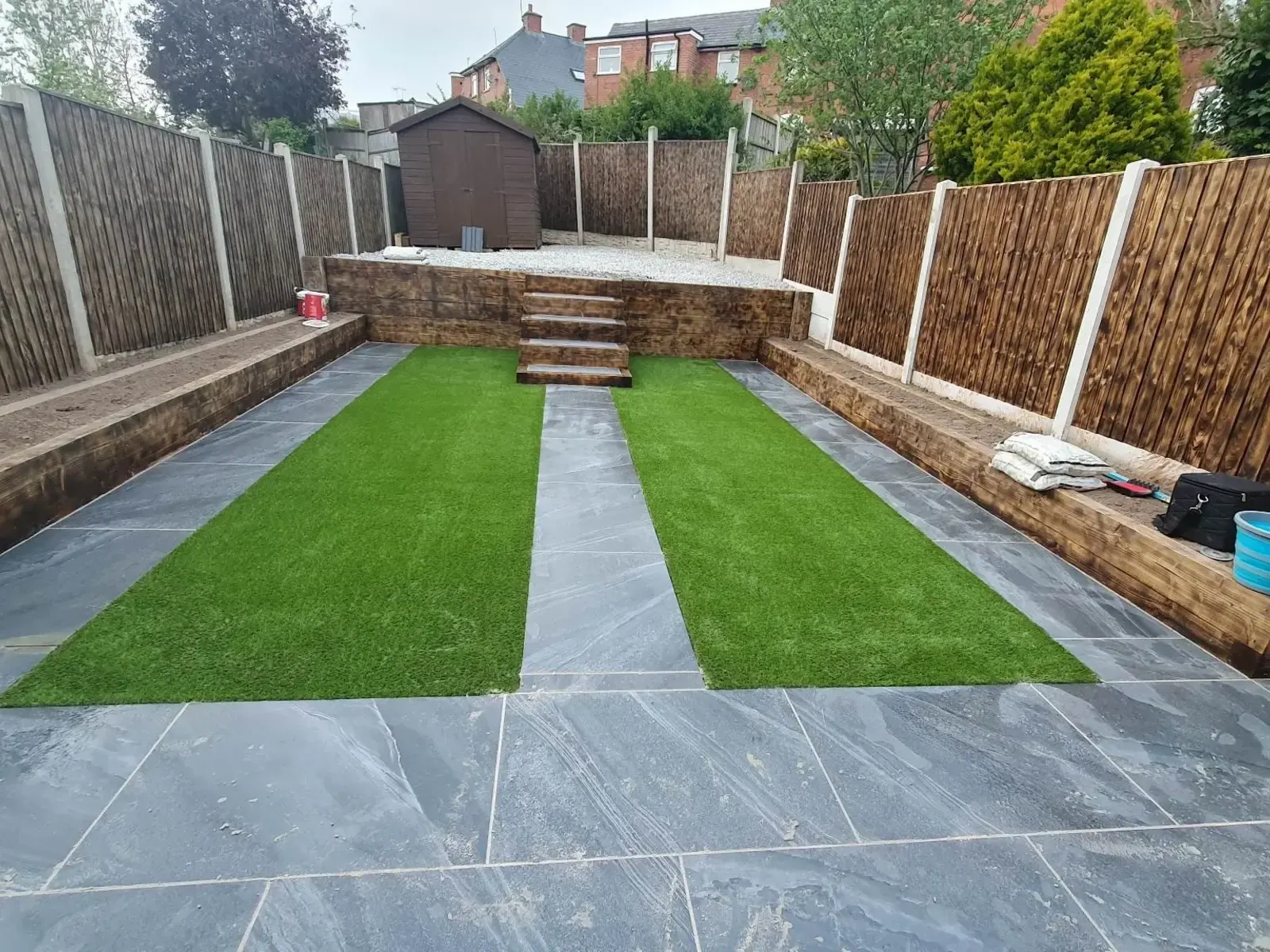
New turf costs £15–£30 per m² on our price guide and artificial grass £50–£85 per m², so a medium 48 m² lawn is about £700–£1,450 in turf or £2,400–£4,100 in artificial grass. Turf is cheaper and natural but needs mowing and care; artificial grass costs more up front and stays green with no mowing.
These are guide prices from our price calculator. They include labour, materials and VAT where applicable, but they are not a quote: the fixed, written price follows a free site visit.
How much does turfing cost per m²?
Our guide rate for new turf is £15 to £30 per square metre. It covers premium rolled turf laid on prepared soil. Clearing the old lawn, weeds and debris and levelling the ground is £5–£10 per m² on top.
How much does artificial grass cost per m²?
Our guide rate is £50 to £85 per square metre, laid on a drained base. The grass you choose, the shape of the lawn and the edging decide where you land in the range.
What does each cost for a typical lawn?
| Lawn size | Area | New turf (guide) | Artificial grass (guide) |
|---|---|---|---|
| Small, 5 × 4 m | 20 m² | £300 – £600 | £1,000 – £1,700 |
| Medium, 8 × 6 m | 48 m² | £700 – £1,450 | £2,400 – £4,100 |
| Large, 12 × 8 m | 96 m² | £1,450 – £2,900 | £4,800 – £8,150 |
With the old lawn cleared and levelled first, the medium lawn becomes about £950–£1,900 in turf or £2,650–£4,550 in artificial grass. Other extras on our guide are lawn edging at £15–£25 per metre, sleeper beds at £450–£900 and a skip for green waste and soil at £250–£400. Restricted access to a back garden adds 12%.
Artificial grass vs real grass: what are the pros and cons?
Artificial grass
- For: green all year with no mowing, feeding or watering; usable soon after rain; copes with shady corners where grass struggles and with family and dog areas that get churned up.
- Against: costs more to lay; it depends completely on the base and edging being done properly; it is not a living lawn, so it does less for wildlife, and it gets warmer than real grass in the sun.
Real turf
- For: much cheaper to lay; feels and smells like a real lawn; stays cooler in summer and is better for wildlife.
- Against: needs regular mowing and some care; heavily used or very shady patches can wear; it needs watering and time to root before you use it.
Which is better for my garden?
Neither is right for every garden. It comes down to how the lawn is used, how much shade and foot traffic it gets, and how much time you want to spend on it.
- Sunny, open lawn and a limited budget: real turf.
- Shady strip, dog run or play area: artificial grass.
- Want no mowing at all: artificial grass.
- Want wildlife and a natural feel: real turf.
Plenty of gardens use both: real turf in the sunny open part, and artificial grass in the shady strip by the fence or around a play area.
How is artificial grass installed so it drains?
Artificial grass lets rain through small holes in its backing, so the base below has to take that water away. Laid straight onto soil, especially the heavy clay common around Ashfield and Mansfield, it will puddle, smell and go lumpy.
We lift the old lawn, dig out the ground, then lay and compact a free-draining stone sub-base, finish it with a fine, level laying course and add a weed membrane. The grass goes down with the pile running the same way on every piece, joined with seaming tape and adhesive, and trimmed tight to the edges. Every edge is fixed to something solid, such as timber, sleepers, metal edging or a paved border, because edges are where a poor install shows first.
What does lawn turfing involve?
Good turf starts with good soil. We remove the old lawn and weeds, cultivate and level the ground, rake in a pre-turf fertiliser and firm it evenly, then lay the rolls in a staggered, brick-like pattern with tight joins so the lawn knits together quickly.
New turf needs watering every day or two in dry weather for the first few weeks, and it is best kept off until it has rooted. It can be laid for much of the year, but not on frozen or waterlogged ground or in a drought; spring and autumn are easiest.
How long does each take to lay?
On our calculator's guide, a medium 48 m² lawn is one to two days on site in either turf or artificial grass. A large 96 m² artificial lawn is three to four days, because the base takes longer to build. Levelling a sloping garden or working through a narrow side path adds time.
Quick answers
- Turfing cost per m²: £15–£30 on our guide, plus £5–£10 per m² to clear and level.
- Artificial grass cost per m²: £50–£85 on our guide, on a drained base.
- Medium 48 m² lawn: about £700–£1,450 in turf, £2,400–£4,100 in artificial grass.
- Lowest upkeep: artificial grass.
- Best for wildlife and summer heat: real turf.
See our artificial grass and turfing page, work out a guide price with the price calculator, or book a free site visit: Lucian checks the ground, drainage and access and gives you one fixed, written price.
Last updated: 29 September 2026. Written by Lucian, owner of C&L Landscaping & Driveways, Sutton-in-Ashfield.